Most chronic tension, sinus, and even some migraine headaches originate in the upper cervical spine. We assess and treat the actual source — not just the symptom.
Plain-English on what’s actually going on — so the treatment plan makes sense before you commit to it.
Why most chronic headaches start in the neck
The top three cervical vertebrae share nerve pathways with the trigeminal nerve — the same nerve that carries pain signals from your face, sinuses, and the front of your head. When C1 through C3 lose mobility or the suboccipital muscles stay in chronic guard, your nervous system reads it as a frontal, sinus, or ‘around the eye’ headache. The pain shows up in front; the cause is in the back.
Why posture is the silent driver
Every inch your head sits forward of your shoulders adds about 10 pounds of effective load to the muscles holding it up. After eight hours at a screen, that load is what your suboccipitals are holding — and they’re the same muscles that, when they finally fatigue, refer pain into your forehead and temples.
What we do about it
Three things, in this order.
No 36-visit packages. No mystery techniques. Just the part that actually changes the picture.
01
Pattern map first
Where it starts, where it travels, and what triggers it tells us which cervical level is driving it before we even touch you.
02
Targeted upper-cervical work
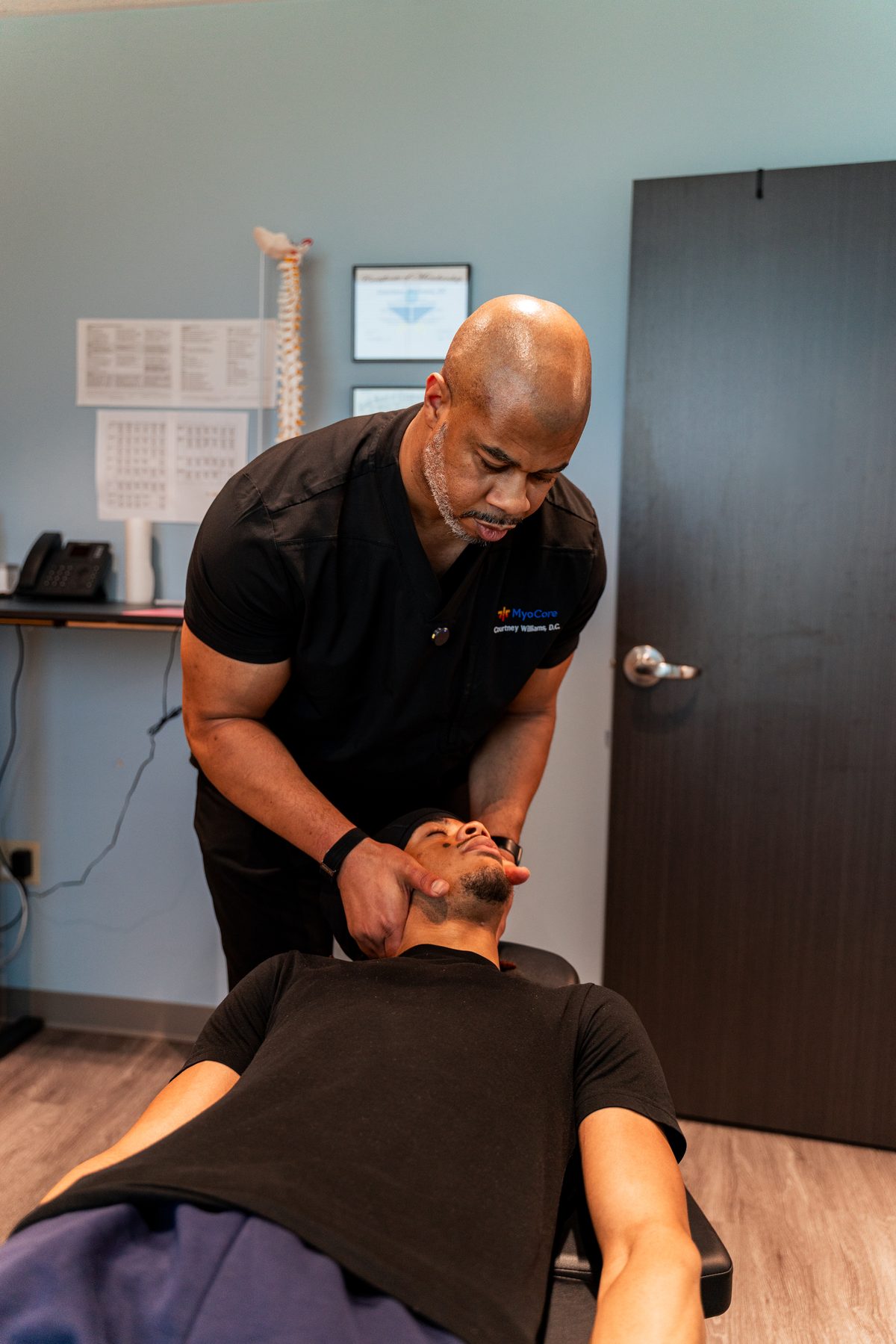
Specific, low-force adjustments to C1 / C2, suboccipital release, and TMJ assessment when the pattern fits.
03
Fix the input
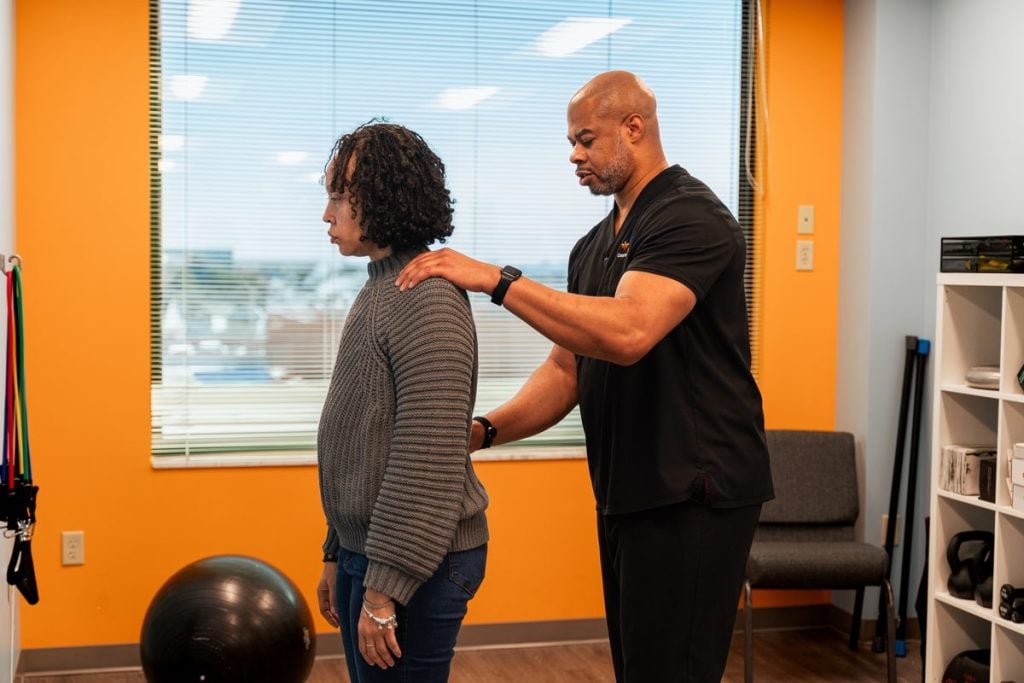
Workstation setup, screen height, sleep posture — the ergonomic changes that prevent the next episode.
What happens during a visit
No mystery. No surprises.
Every visit follows the same honest structure — assess, treat, plan. Here’s exactly what to expect.
01
Headache history and pattern map
Where it starts, where it travels, what triggers it. The pattern usually points directly at the cervical level driving it.
02
Upper-cervical exam
Specific assessment of C1–C3 movement, suboccipital muscle tone, and TMJ involvement.
03
Targeted treatment
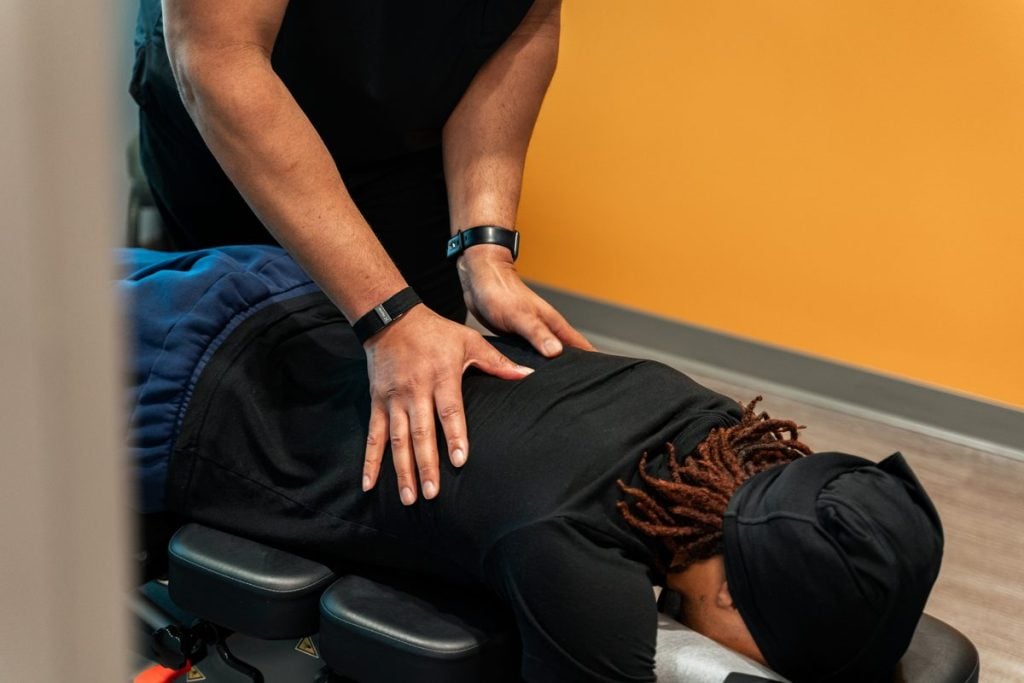
Gentle cervical adjustments, suboccipital release, and posture re-training — usually combined in a single visit.
04
Trigger reduction at home
Workstation setup, sleep posture, screen-height adjustments, and the specific stretches that prevent the next episode.
From the library
See it explained, then read the deeper version.
Short videos from Dr. Williams and Dr. Wilson on this exact topic. Each one links to a full article so you can save or share it.
Don’t see what you’re dealing with? Call us — we’ll tell you honestly whether we can help or who to see instead.
Who this is for
A good fit if…
Headaches more than once a week
Headaches that started after a neck injury or whiplash
Migraine sufferers wanting a non-medication option
Common questions
The questions we hear most.
If yours isn’t here, just ask when you call — we don’t gatekeep information.
Will adjustments make a migraine worse?
We don’t adjust during an active migraine — we use gentle soft-tissue work and decompression instead. Between episodes, structural work has strong evidence for reducing migraine frequency.
Do I need imaging first?
Not typically. If your exam findings suggest something beyond mechanical, we’ll refer you for imaging or to your primary care doctor. We don’t guess.
 Franchise